
Why Businesses Are Turning to Appium Mobile Automation Testing
Mobile applications have become a critical touchpoint for customer engagement, revenue generation, and brand reputation. However, ensuring flawless performance across hundreds of Android and iOS devices presents a significant challenge. Manual testing alone often leads to longer release cycles, higher operational costs, and inconsistent test coverage.
This is where Mobile Automation Testing becomes essential. By automating repetitive and time-consuming test scenarios, organizations can accelerate releases, improve software quality, and significantly reduce testing expenses.
Among the available automation tools, Appium Automation Testing has emerged as one of the most effective solutions for businesses seeking reliable and cost-efficient mobile testing for both Android and iOS platforms. Appium's open-source architecture and cross-platform capabilities allow QA teams to create reusable test scripts, reducing maintenance efforts and maximizing ROI. Appium supports automation across Android and iOS using a unified WebDriver-based approach and is widely adopted for cross-platform mobile testing.
Understanding the Appium Testing Framework
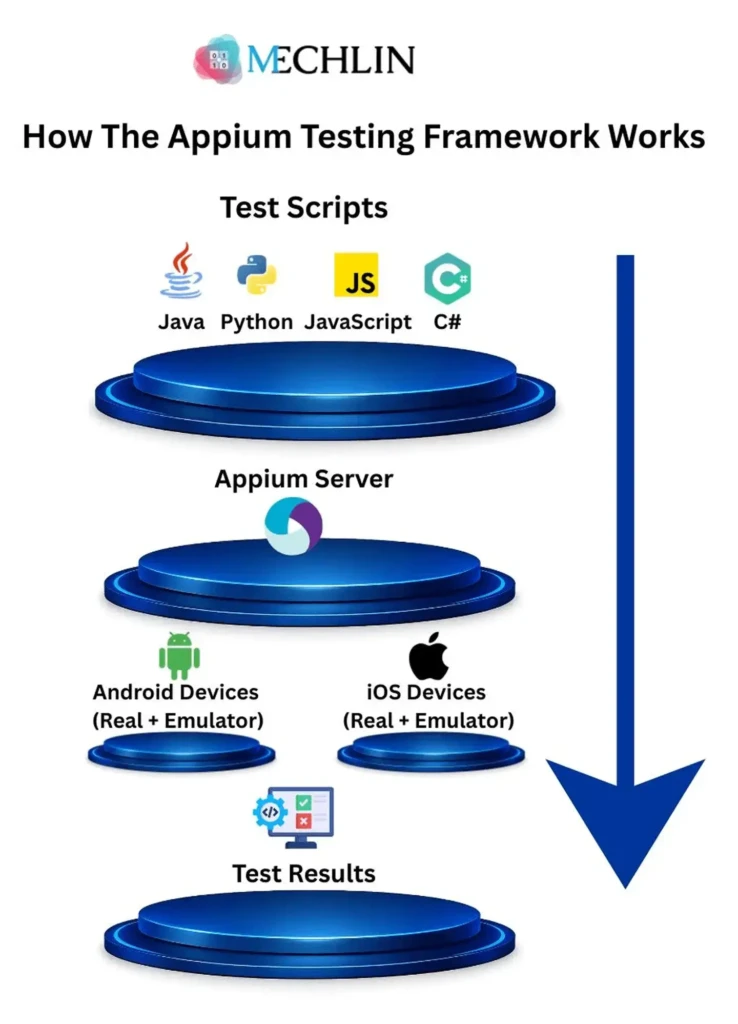
The Appium Testing Framework is an open-source mobile automation solution designed to automate native, hybrid, and mobile web applications. It enables testers to write automation scripts using popular programming languages such as Java, Python, JavaScript, C#, and Ruby.
Unlike platform-specific testing tools, Appium allows teams to automate tests for both Android and iOS applications using a common automation strategy. This flexibility makes it a preferred choice for organizations looking to streamline their mobile QA processes while keeping costs under control. Appium is designed for UI automation across mobile platforms and follows the W3C WebDriver standard, enabling consistent automation practices across environments.
The Rising Cost of Manual Mobile App Testing
As mobile ecosystems continue to expand, testing complexity grows exponentially. QA teams must validate applications across:
• Multiple operating system versions
• Different screen sizes and resolutions
• Device manufacturers
• Network conditions
• User interaction scenarios
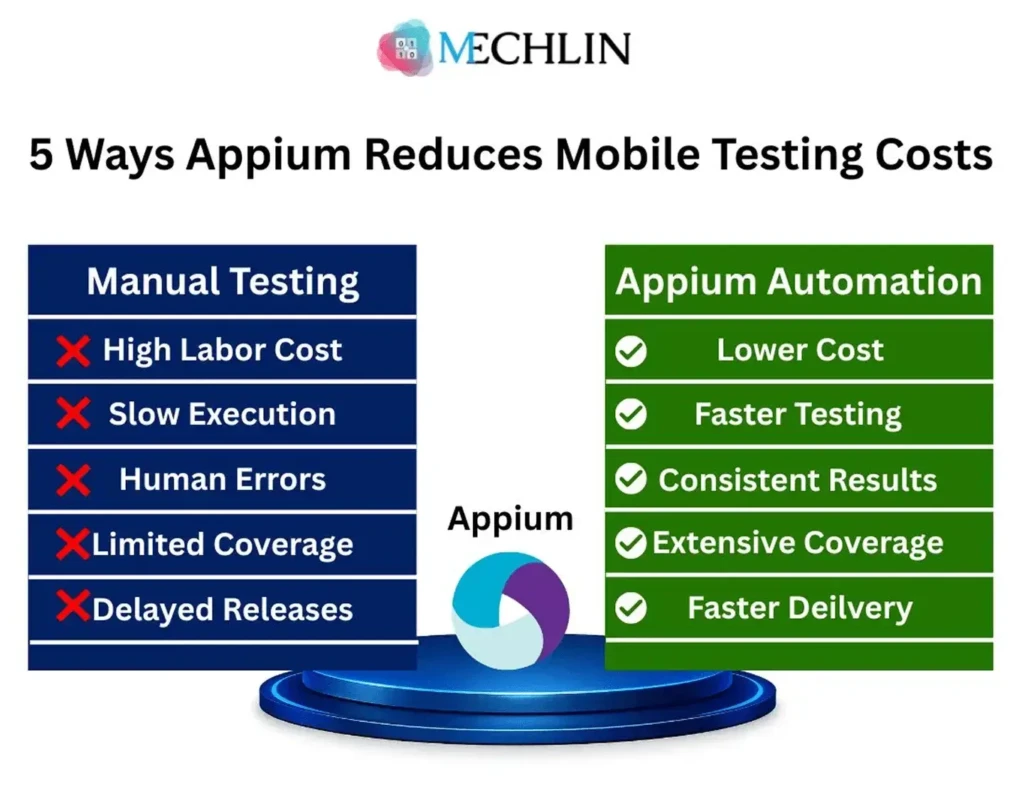
Manual testing every possible combination requires substantial time and resources. Common cost drivers include:
1. High Labor Costs
Manual execution of repetitive test cases consumes valuable QA resources and increases project expenses.
2. Longer Release Cycles
Testing delays often postpone product launches, impacting business growth and customer satisfaction.
3. Human Errors
Manual processes are prone to inconsistencies, which can lead to missed defects and costly production issues.
4. Increased Regression Testing Effort
Every new feature requires retesting existing functionalities, creating a growing testing workload.
These challenges make automation a necessity rather than a luxury.
How Appium Automation Testing Reduces Testing Costs
Reusable Test Scripts Across Platforms
One of the biggest advantages of Cross Platform Mobile Testing with Appium is script reusability.
Instead of maintaining separate automation frameworks for Android and iOS, teams can reuse a significant portion of their test logic across both platforms. This dramatically reduces development and maintenance efforts. Appium's architecture enables teams to write tests once and execute them across supported platforms with minimal modifications.
Faster Test Execution
Automated test suites can run much faster than manual tests and can be executed continuously throughout the development lifecycle.
Benefits include:
• Rapid feedback for developers
• Faster bug detection
• Reduced release delays
• Increased testing productivity
Organizations can complete comprehensive regression cycles in hours instead of days.
Lower Infrastructure Costs
As an open-source solution, Appium eliminates expensive licensing fees associated with many commercial testing tools.
Companies benefit from:
• No vendor lock-in
• Lower upfront investment
• Flexible integration with existing CI/CD pipelines
• Community-driven improvements
This significantly lowers the total cost of ownership for mobile test automation initiatives. Appium is open source and widely recognized for reducing licensing-related testing costs.
Improved Test Coverage
Automated testing enables organizations to execute hundreds or thousands of test cases repeatedly without additional effort.
Enhanced coverage helps identify:
• Functional defects
• UI inconsistencies
• Performance bottlenecks
• Device-specific issues
Detecting defects earlier reduces the cost of fixing bugs later in production.
Continuous Testing in CI/CD Pipelines
Modern DevOps practices require frequent releases. Appium integrates seamlessly with popular CI/CD tools, allowing automated tests to run with every code commit.
This approach helps organizations:
• Prevent regression issues
• Accelerate deployment cycles
• Reduce manual validation efforts
• Improve release confidence
Android App Automation Testing with Appium
Android fragmentation remains one of the biggest testing challenges for businesses. Applications must perform consistently across numerous devices, manufacturers, and OS versions.
Android App Automation Testing with Appium enables QA teams to:
• Automate functional testing
• Validate user journeys
• Execute regression suites efficiently
• Test on emulators and real devices
• Ensure compatibility across Android environments
Appium leverages Android automation technologies while providing a unified framework that simplifies large-scale testing efforts.
iOS App Automation Testing with Appium
Testing iOS applications requires validating functionality across iPhones, iPads, and different iOS versions.
With iOS App Automation Testing, Appium helps organizations:
• Automate repetitive testing workflows
• Verify critical business functions
• Improve release quality
• Test on simulators and physical devices
• Support scalable regression testing
By using a common framework for Android and iOS, businesses eliminate the need for separate automation strategies and reduce overall testing costs. Appium supports iOS automation through Apple's XCUITest-based ecosystem and works with both simulators and real devices.
Key Benefits of Test Automation for Mobile Apps
Organizations implementing Test Automation for Mobile Apps with Appium typically experience measurable business advantages.
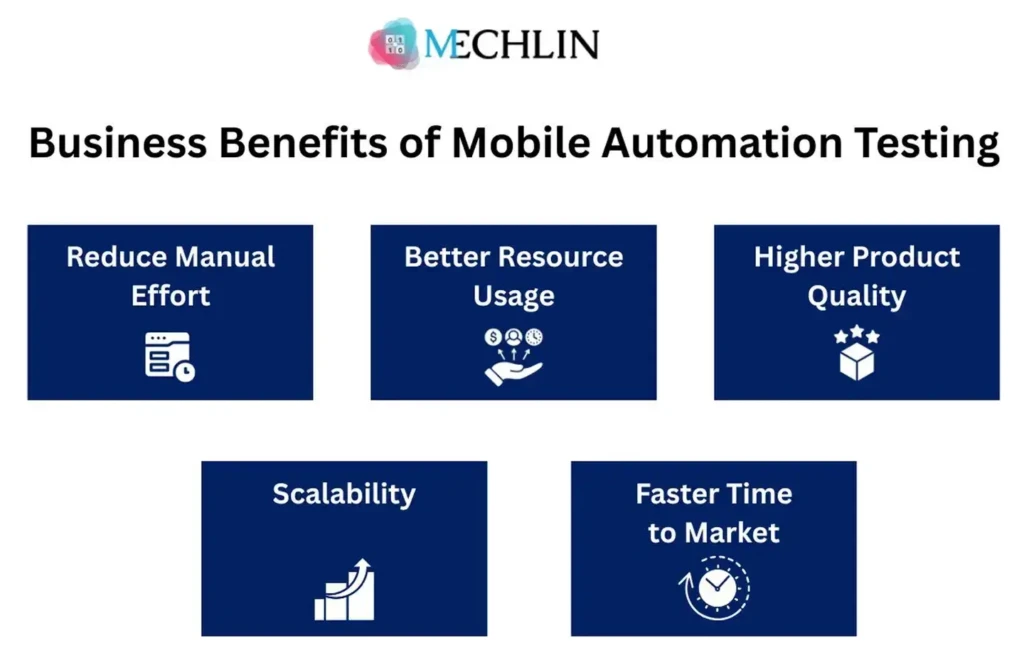
Reduced Testing Time
Automated execution accelerates validation cycles and shortens release timelines.
Better Resource Utilization
QA teams can focus on exploratory and strategic testing instead of repetitive manual tasks.
Higher Product Quality
Continuous automated testing improves defect detection and application reliability.
Scalability
Automation frameworks can easily expand as applications grow in complexity.
Faster Time-to-Market
Businesses can launch updates and new features more quickly without compromising quality.
Best Practices for Successful Appium Automation Testing
To maximize cost savings and automation ROI, organizations should follow these best practices:
Build a Scalable Automation Framework
Create reusable components and modular test architecture.
Prioritize High-Impact Test Cases
Automate regression, smoke, and critical business workflows first.
Prioritize High-Impact Test Cases
Automate regression, smoke, and critical business workflows first.
Prioritize High-Impact Test Cases
Automate regression, smoke, and critical business workflows first.
Use Real Devices Alongside Emulators
Ensure accurate validation under real-world conditions.
Integrate with CI/CD Pipelines
Enable continuous testing throughout the development lifecycle.
Maintain Test Scripts Regularly
Keep automation assets updated as applications evolve.
Why Choose Mechlin Technologies for Mobile Automation Testing?
At Mechlin Technologies, we help organizations accelerate software delivery while reducing testing costs through advanced Mobile Automation Testing solutions.
Our automation experts leverage the Appium Testing Framework to deliver:
• End-to-end mobile test automation
• Android App Automation Testing
• iOS App Automation Testing
• Cross Platform Mobile Testing
• Continuous testing integration
• Scalable QA automation strategies
By combining industry best practices with proven automation methodologies, we help businesses improve software quality, optimize testing investments, and achieve faster releases.